Financial markets are constantly changing. Prices rise, fall, and sometimes move sideways for long periods. For many investors, this uncertainty creates stress and confusion. Traditional investing often relies on markets going up over time, which can leave traders feeling powerless during downturns or periods of low volatility.
Option trading, however, offers a different approach. When used correctly, options provide flexibility that allows traders to seek profits in almost any market condition—bullish, bearish, or neutral. This adaptability is what makes options attractive to both experienced traders and those looking to diversify their strategies.
This article explains how option trading works, why it can be profitable in various market environments, and what traders need to understand before getting started. The goal is not to promise guaranteed profits, but to provide a realistic, educational overview of how options can be used responsibly and strategically.
Understanding the Basics of Option Trading
Before exploring how options can profit in any market condition, it is essential to understand what options are and how they function.
What Are Options?
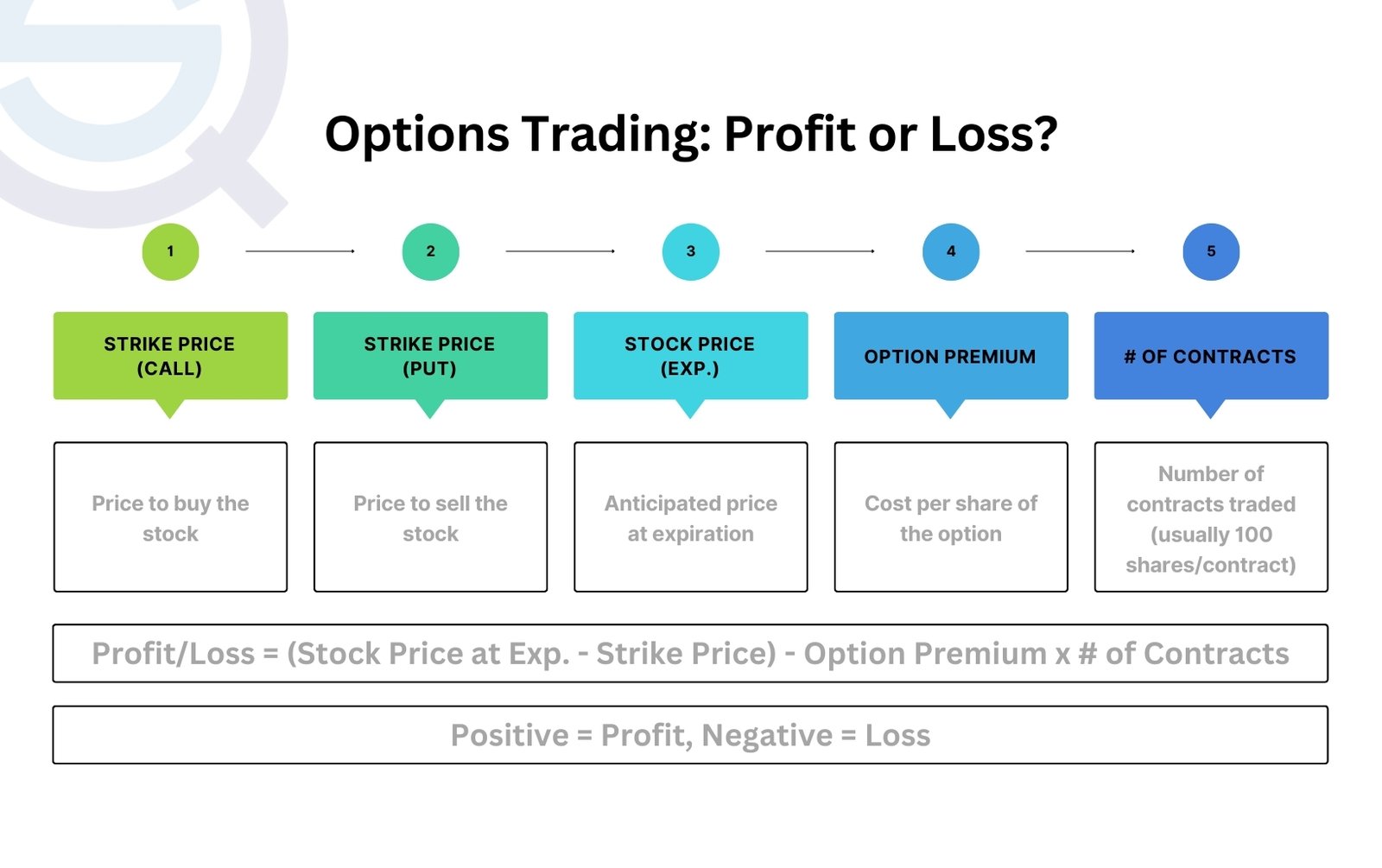
Options are financial contracts that give the buyer the right, but not the obligation, to buy or sell an underlying asset at a predetermined price within a specific time period. The underlying asset can be a stock, index, exchange-traded fund, or other financial instrument.
There are two primary types of options:
- Call options – give the right to buy an asset
- Put options – give the right to sell an asset
Each option contract has:
- A strike price
- An expiration date
- A premium (the price paid for the option)
Understanding these components is the foundation of successful option trading.
Why Options Are Different from Traditional Investing
Traditional investing often depends on price appreciation over time. Options, by contrast, introduce multiple ways to generate potential profits.
Flexibility in Strategy
Options allow traders to:
- Profit from rising prices
- Profit from falling prices
- Benefit from sideways markets
- Manage risk more precisely
This flexibility makes options particularly useful in uncertain or volatile environments.
Defined Risk in Many Strategies
Many option strategies define risk upfront. This means traders know the maximum potential loss before entering a position, which can help with emotional discipline and capital management.
Profiting in Bull Markets with Options
A bull market is characterised by rising prices and optimistic sentiment. While buying stocks outright can be profitable, options offer alternative approaches.
Using Call Options in Rising Markets
Call options allow traders to benefit from upward price movement with less capital than purchasing shares directly. Instead of paying the full price of a stock, traders pay a premium for the option.
Benefits include:
- Lower initial capital requirement
- Leverage on price movement
- Defined maximum loss
However, timing and volatility play a critical role in success.
Covered Calls for Income
Investors who already own shares can sell call options against them, generating additional income through option premiums. This strategy can enhance returns in steadily rising or mildly bullish markets.
Profiting in Bear Markets with Options
Bear markets can be challenging for traditional investors, but options provide tools to manage and even profit from declining prices.
Put Options as a Defensive Tool
Put options increase in value when the underlying asset declines. Traders can use puts to:
- Speculate on price declines
- Hedge existing stock positions
This makes puts a powerful instrument during market downturns.
Reducing Risk Exposure
Options can help limit downside risk without requiring traders to sell long-term investments. This is particularly useful for investors who want protection without exiting the market entirely.
Making Money in Sideways Markets
One of the most overlooked advantages of option trading is its ability to generate income when markets are not moving significantly.
Understanding Range-Bound Markets
Sideways markets occur when prices fluctuate within a narrow range. Traditional strategies often struggle in these conditions.
Income-Based Option Strategies
Certain option strategies focus on collecting premiums rather than betting on price direction. These approaches can benefit from time decay, where option value decreases as expiration approaches.
This characteristic allows traders to profit even when prices remain relatively stable.
The Role of Volatility in Option Trading
Volatility is a key factor in option pricing and profitability.
What Is Volatility?
Volatility measures how much an asset’s price fluctuates over time. Higher volatility generally increases option premiums, while lower volatility reduces them.
Adapting Strategies to Volatility Levels
Option traders can adjust their strategies depending on whether volatility is high or low. Understanding this relationship helps traders avoid overpaying for options or selling them too cheaply.
Risk Management: The Foundation of Long-Term Success
While options offer flexibility, they also involve risks. Profiting in any market condition requires disciplined risk management.
Position Sizing
Limiting the size of each trade relative to total capital helps protect against large losses. No single trade should significantly impact overall financial stability.
Understanding Maximum Loss
Many option strategies have defined risk, but traders must fully understand worst-case scenarios before entering a position.
The Importance of Time in Option Trading
Time is a unique factor in option pricing that does not exist in traditional stock investing.
Time Decay Explained
Options lose value as they approach expiration, a phenomenon known as time decay. This can work for or against traders, depending on their strategy.
Choosing the Right Expiration
Selecting appropriate expiration dates helps align trades with market expectations and risk tolerance.
Emotional Discipline and Decision-Making
Markets are influenced by human behaviour, and option trading is no exception.
Avoiding Emotional Trading
Fear and greed can lead to impulsive decisions. Having predefined rules for entry, exit, and risk helps maintain discipline.
Patience and Consistency
Not every market condition will offer ideal opportunities. Successful option traders wait for setups that align with their strategy rather than forcing trades.
Education and Continuous Learning
Option trading is a skill that improves with education and experience.
Learning the Fundamentals
Understanding pricing, risk, and strategy mechanics is essential before committing real capital.
Adapting to Market Changes
Markets evolve over time. Staying informed and flexible allows traders to adjust strategies as conditions change.
Common Misconceptions About Option Trading
Many people avoid options due to misunderstandings.
“Options Are Too Risky”
While some strategies carry high risk, others are designed specifically to reduce risk. The danger often comes from lack of knowledge rather than the instrument itself.
“Options Are Only for Experts”
While options are complex, they are accessible to anyone willing to learn and practise responsibly.
Building a Sustainable Option Trading Approach
The goal of option trading should not be short-term excitement but long-term sustainability.
Creating a Trading Plan
A clear plan outlines:
- Goals
- Risk limits
- Preferred strategies
- Review processes
This structure supports consistent decision-making.
Measuring Performance Realistically
Evaluating results over time, rather than focusing on individual trades, provides a clearer picture of progress.
The Role of Options in a Diversified Portfolio
Options do not need to replace traditional investments. Instead, they can complement them.
Enhancing Portfolio Flexibility
Options can add income, protection, or growth potential depending on how they are used.
Balancing Risk and Opportunity
Used wisely, options allow traders to adapt portfolios to changing market environments.
Long-Term Perspective: Profiting Across Market Cycles
Markets move in cycles, and no condition lasts forever.
Preparing for Different Scenarios
Option traders who understand multiple strategies can adjust as markets shift from bullish to bearish or sideways.
Focus on Process, Not Perfection
Consistent application of sound principles matters more than predicting market direction perfectly.
Final Thoughts: How Option Trading Can Profit in Any Market Conditions
Option trading offers a versatile set of tools that can adapt to virtually any market environment. By understanding how options work, respecting risk, and maintaining discipline, traders can seek opportunities whether markets are rising, falling, or standing still.
The key to success lies not in chasing profits, but in building a structured, informed approach that aligns with personal goals and risk tolerance. When used responsibly, option trading can become a valuable component of a well-rounded financial strategy.
As with any financial activity, education, patience, and realistic expectations are essential. With the right mindset and preparation, option trading can provide flexibility and opportunity across all market conditions.
Summary:
Learn exactly how you can profit when stocks are up, when stocks are down and when stocks are sideways using option trading!
Keywords:
Option trading, options trading, call option, put option, option strategies
Article Body:
All stock market multi millionaires must be able to profit under any kind of market conditions. If you are able to profit only when stock markets go up, then you will find it a gargantuan task to ever have any sustainable success, much less become a stock market millionaire.
Yes! It is possible and easy to profit whether stocks are up, down or sideways using option trading. If the ability to trade all kinds of market conditions is the doorway to becoming a stock market millionaire, then option trading would be the very key.
In this article, I will outline some common ways by which you can profit from all kinds of markets by option trading. For more free option trading information, you may wish to visit www.OptionTradingPedia.com.Simple Option Strategies for Up MarketsBuy Call Option – You could buy the same number of equivalent stocks for a fraction of the price using call options and profit when the stock goes up. If the stock should crash, you will lose only the small amount you put towards buying the option instead of the whole amount that you would have put towards buying the stock itself.
Sell Naked Put Option – Instead of buying call options, you could sell short put options thereby pocketing the entire amount you made on selling the put options if the stock should go up. Bull Call Spread – A bull call spread consists of buying call options at the money and selling short out of the money call options of the same month. The benefit of this strategy is that you profit when the stock goes up and profit also when the stock stays sideways!
Simple Option Strategies for Down MarketsBuy Put Option – Instead of shorting stocks and risking a margin call, you could simply buy a put option. Buying a put option is exactly the same as buying call options except that you profit when the stock goes down instead of up.Sell Naked Call Option – Instead of buying put options, you could sell short call options thereby pocketing the entire amount you made on selling the put options if the stock should go down.
Bear Put Spread – A bear put spread consists of buying put options at the money and selling short out of the money put options of the same month. The benefit of this strategy is that you profit when the stock goes down and profit also when the stock stays sideways!
Simple Option Strategies for UP or DOWN MarketsStraddle – A straddle consist of buying a call option and a put option at the same strike price on the same stock. This strategy allows you to profit whether the stock moves up or down and is excellent when you are certain that a stock will move greatly soon but isn’t sure which direction that may be.Strangle – Similar concept to a straddle but buys out of the money call option and put option instead of at the money ones in order to reduce the cost of the position.
Simple Option Strategies for Sideways Markets – Covered Call – If you are holding on to a stock that is moving sideways, you could collect “rental” out of it by selling the call option of that stock month after month and pocket the whole amount of the sale should the stock remain sideways.
Short Straddle – Instead of buying call options and put options as described above in a Straddle, you would sell short them instead. In this way, you create an option position which profits when the stock remains sideways.
Are you amazed now at how easy it is to profit in any kind of market conditions by option trading? These are only very few of the many more option trading strategies that you can use to your specific portfolio needs. To learn more about what option trading and stock options are for free, please visit www.OptionTradingPedia.com.
Tinggalkan Balasan